SignaCell™
How it works
The technology is based on biomimetic signal induction - transmitting signals that imitate natural intercellular signals, without releasing any chemical substances. Our beads act as an active communicator that significantly enhances the natural signaling of microorganisms, cells, and crop plants.
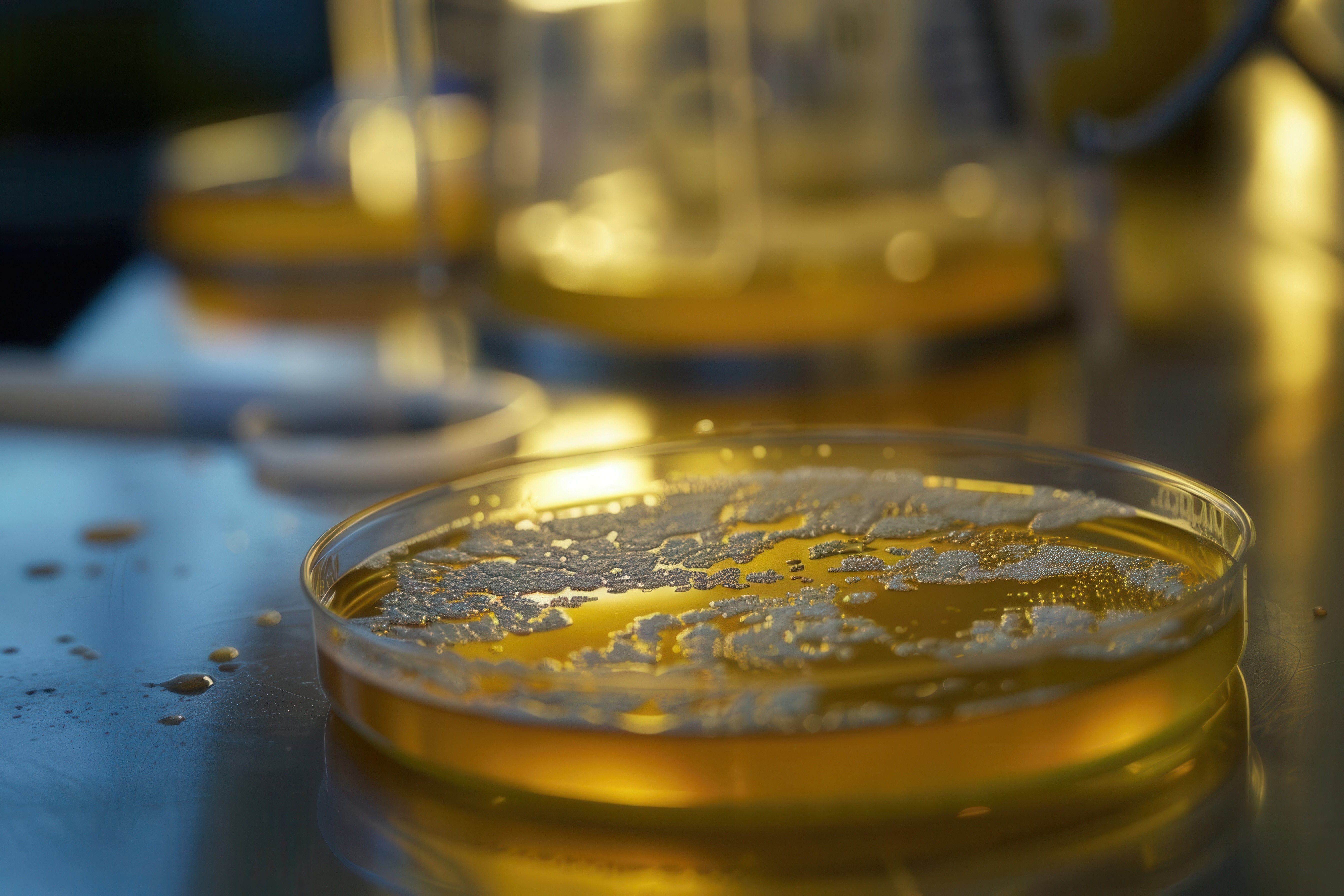
Key mechanism
Quartz beads with neural network-inspired architecture generate coordinated biomimetic signals that are recognized by cells as authentic pro-proliferative communication. This high-fidelity mimicry of natural signals leads to synergistic activation of multiple pathways simultaneously, achieving 100-300% efficiency increase through exploitation of crosstalk phenomena in the cellular signaling network.

Pathways activated through biomimetic signal induction

Mammalian cells
Mammalian cells
PI3K/AKT/mTOR pathway
PI3K/AKT/mTOR pathway
Activated by mimicking growth factor signals
MAPK/ERK cascade
MAPK/ERK cascade
Induced by imitating mitogenic signals
cAMP/PKA pathway
cAMP/PKA pathway
Stimulated by mimicking natural hormonal signals
Wnt/β-catenin pathway
Wnt/β-catenin pathway
Activated by biomimicry of developmental signals
Mammalian cells
PI3K/AKT/mTOR pathway
Activated by mimicking growth factor signals
MAPK/ERK cascade
Induced by imitating mitogenic signals
cAMP/PKA pathway
Stimulated by mimicking natural hormonal signals
Wnt/β-catenin pathway
Activated by biomimicry of developmental signals

Microorganisms
Microorganisms
Quorum sensing
Quorum sensing
Enhancement through autoinducer signal mimicry
Two-component signaling systems
Two-component signaling systems
Activation by imitating environmental signals
Stress response pathways
Stress response pathways
Induction through biomimicry of adaptive signals
TOR-like systems
TOR-like systems
Stimulation by mimicking nutrient availability signals
Microorganisms
Quorum sensing
Enhancement through autoinducer signal mimicry
Two-component signaling systems
Activation by imitating environmental signals
Stress response pathways
Induction through biomimicry of adaptive signals
TOR-like systems
Stimulation by mimicking nutrient availability signals

Fungi
Fungi
Mechanosensory pathways
Direct response to topographic and mechanical signals
Two-component systems
Two-component systems
Sensory systems responding to physical environmental changes
MAPK stress pathways
MAPK stress pathways
Activated by environmental signals (HOG, CWI)
Fungal quorum sensing
Fungal quorum sensing
Enhancement of natural communication through signal mimicry
Cell wall sensory systems
Cell wall sensory systems
Recognition of microenvironmental changes
Ca2+ ion channels
Ca2+ ion channels
Responding to electrical and mechanical signals
Fungi
Mechanosensory pathways
Direct response to topographic and mechanical signals
Two-component systems
Sensory systems responding to physical environmental changes
MAPK stress pathways
Activated by environmental signals (HOG, CWI)
Fungal quorum sensing
Enhancement of natural communication through signal mimicry
Cell wall sensory systems
Recognition of microenvironmental changes
Ca2+ ion channels
Responding to electrical and mechanical signals

Plants
Mechanosensory pathways
Mechanosensory pathways
Touch, wind responses and mechanical signals (thigmotropism)
Gravitropic systems
Gravitropic systems
Sensory responses to spatial orientation changes
Mechanosensitive ion channels
Mechanosensitive ion channels
Direct response to physical signals
Ca2+ pathways
Ca2+ pathways
Secondary messengers activated by electrical signals
Root sensory systems
Root sensory systems
Recognition of soil environment changes
MAPK stresss cascades
MAPK stresss cascades
Activated by abiotic stress signals
Plants
Mechanosensory pathways
Touch, wind responses and mechanical signals (thigmotropism)
Gravitropic systems
Sensory responses to spatial orientation changes
Mechanosensitive ion channels
Direct response to physical signals
Ca2+ pathways
Secondary messengers activated by electrical signals
Root sensory systems
Recognition of soil environment changes
MAPK stresss cascades
Activated by abiotic stress signals
Eukaryotic cells
PI3K/AKT/mTOR pathway
Activated by mimicking growth factor signals
MAPK/ERK cascade
Induced by imitating mitogenic signals
cAMP/PKA pathway
Stimulated by mimicking natural hormonal signals
Wnt/β-catenin pathway
Activated by biomimicry of developmental signals
Eukaryotic cells
PI3K/AKT/mTOR pathway
Activated by mimicking growth factor signals
MAPK/ERK cascade
Induced by imitating mitogenic signals
cAMP/PKA pathway
Stimulated by mimicking natural hormonal signals
Wnt/β-catenin pathway
Activated by biomimicry of developmental signals
Microorganisms
Quorum sensing
Enhancement through autoinducer signal mimicry
Two-component signaling systems
Activation by imitating environmental signals
Stress response pathways
Induction through biomimicry of adaptive signals
TOR-like systems
Stimulation by mimicking nutrient availability signals
Fungi
Mechanosensory pathways
Direct response to topographic and mechanical signals
Two-component systems
Sensory systems responding to physical environmental changes
MAPK stress pathways
Activated by environmental signals (HOG, CWI)
Fungal quorum sensing
Enhancement of natural communication through signal mimicry
Cell wall sensory systems
Recognition of microenvironmental changes
Ca2+ ion channels
Responding to electrical and mechanical signals
Plants
Mechanosensory pathways
Touch, wind responses and mechanical signals (thigmotropism)
Gravitropic systems
Sensory responses to spatial orientation changes
Mechanosensitive ion channels
Direct response to physical signals
Ca2+ pathways
Secondary messengers activated by electrical signals
Root sensory systems
Recognition of soil environment changes
MAPK stresss cascades
Activated by abiotic stress signals
Core Benefits
Accelerated bioprocesses contribute to the overall efficiency of production, reducing the time required for biochemical reactions and process completion.
Higher cell multiplication rates result in more rapid growth of microorganisms, increasing biomass production and higher yields in biotechnological applications.
Improved nutrient conversion enhances the efficiency with which microorganisms utilize available nutrients, optimizing growth conditions and maximizing output.
Increased end-product yields from bioreactor cultures are achieved through optimized process conditions, leading to more efficient production of desired bioproducts.
Faster qualitative and quantitative determinations of microorganisms of microorganisms enable more rapid analysis and monitoring, which is crucial for optimizing bioprocesses and ensuring product quality.
Enhanced identification of primary and secondary metabolites in post-reaction mixtures allows for more accurate tracking of product formation and byproduct production, facilitating better control over the overall bioprocess.
In crop plants, it promotes growth, enhances micronutrient uptake, reduces stress levels, and positively influences the natural soil microbiome.

Eukaryotic cells
PI3K/AKT/mTOR pathway
Activated by mimicking growth factor signals
MAPK/ERK cascade
Induced by imitating mitogenic signals
cAMP/PKA pathway
Stimulated by mimicking natural hormonal signals
Wnt/β-catenin pathway
Activated by biomimicry of developmental signals
Microorganisms
Quorum sensing
Enhancement through autoinducer signal mimicry
Two-component signaling systems
Activation by imitating environmental signals
Stress response pathways
Induction through biomimicry of adaptive signals
TOR-like systems
Stimulation by mimicking nutrient availability signals
Fungi
Mechanosensory pathways
Direct response to topographic and mechanical signals
Two-component systems
Sensory systems responding to physical environmental changes
MAPK stress pathways
Activated by environmental signals (HOG, CWI)
Fungal quorum sensing
Enhancement of natural communication through signal mimicry
Cell wall sensory systems
Recognition of microenvironmental changes
Ca2+ ion channels
Responding to electrical and mechanical signals
Plants
Mechanosensory pathways
Touch, wind responses and mechanical signals (thigmotropism)
Gravitropic systems
Sensory responses to spatial orientation changes
Mechanosensitive ion channels
Direct response to physical signals
Ca2+ pathways
Secondary messengers activated by electrical signals
Root sensory systems
Recognition of soil environment changes
MAPK stresss cascades
Activated by abiotic stress signals
Core Benefits
Accelerated bioprocesses contribute to the overall efficiency of production, reducing the time required for biochemical reactions and process completion.
Higher cell multiplication rates result in more rapid growth of microorganisms, increasing biomass production and higher yields in biotechnological applications.
Improved nutrient conversion enhances the efficiency with which microorganisms utilize available nutrients, optimizing growth conditions and maximizing output.
Increased end-product yields from bioreactor cultures are achieved through optimized process conditions, leading to more efficient production of desired bioproducts.
Faster qualitative and quantitative determinations of microorganisms of microorganisms enable more rapid analysis and monitoring, which is crucial for optimizing bioprocesses and ensuring product quality.
Enhanced identification of primary and secondary metabolites in post-reaction mixtures allows for more accurate tracking of product formation and byproduct production, facilitating better control over the overall bioprocess.
In crop plants, it promotes growth, enhances micronutrient uptake, reduces stress levels, and positively influences the natural soil microbiome.
Overall Technical Implementation and Benefits
Universal Process Integration
Validated Technology Benefits Across Industries
Economic Impact
Environmental and Sustainability Benefits
Quality Assurance
Competitive Advantages
